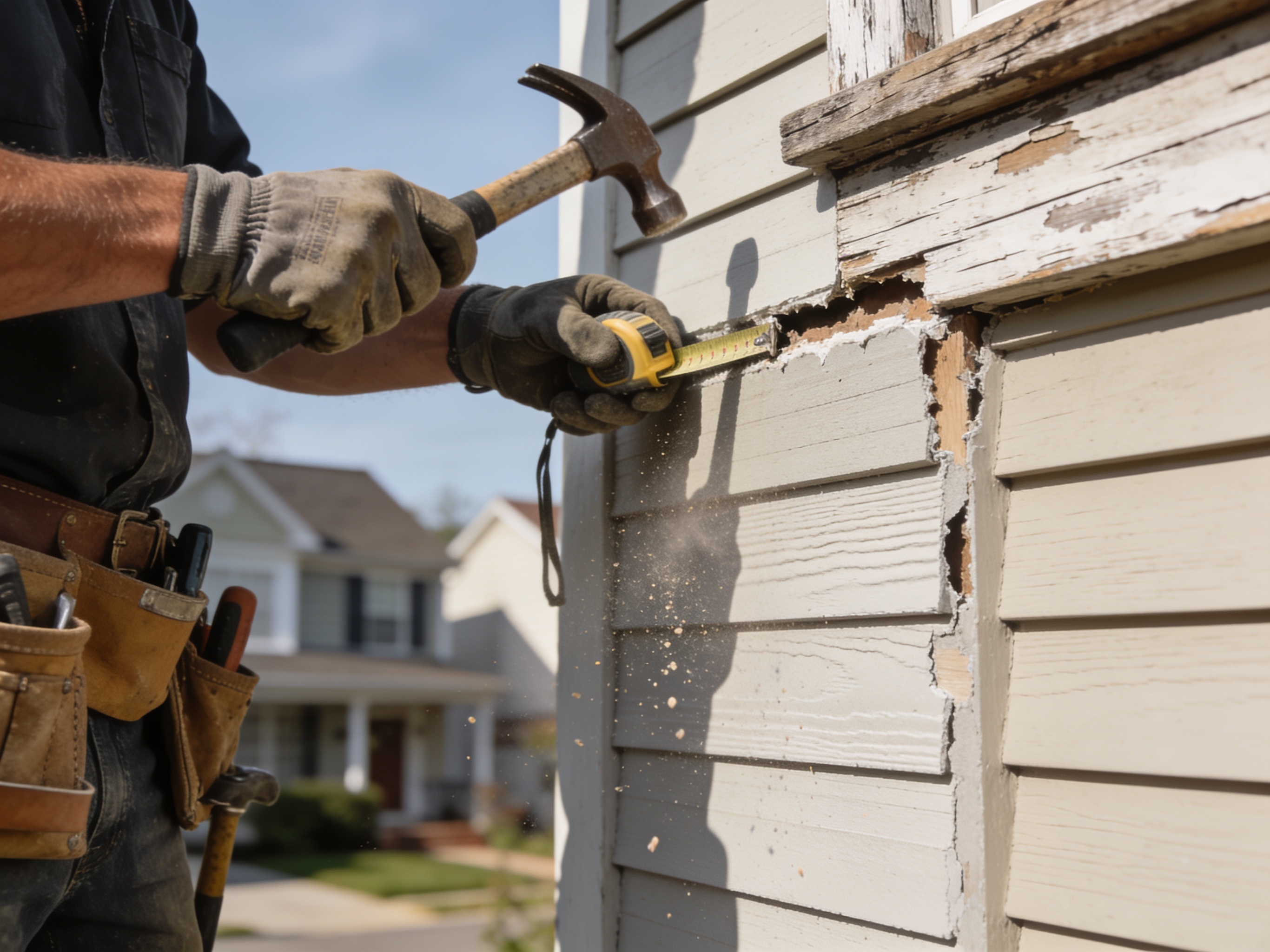
Fiber cement siding holds up well in Fort Bend County but develops hairline cracks and moisture intrusion where panels meet around windows and at the foundation line, especially on homes in River Park and near the Brazos River. The pros we connect you with start by checking for soft sheathing caused by repeated summer humidity and mild winter condensation cycles that trap water behind the material. Proper repair requires removing only the damaged sections, installing new factory-primed pieces, and sealing all joints with exterior-grade caulk rated for high-moisture environments.
Homes in The Grove and Richmond Landing often feature fiber cement installed over older wood framing that has settled, creating uneven gaps that standard patches fail to address. Local crews check for proper nailing patterns and clearance above grade to prevent wicking from the soil common along the river corridor. They also verify that replacement boards match the existing texture and thickness so the repair blends without visible lines after painting.
Repairs near the Fort Bend County Courthouse and Richmond Railroad Museum frequently involve matching historic profiles on 1980s and 1990s homes while meeting current Fort Bend County wind and rain exposure standards. The pros we connect you with carry spare stock of common James Hardie and CertainTeed profiles to avoid delays when a single board near a gable end or corner post needs replacement after storm damage.
Technician insight
In Richmond, the thing that catches most people out with Fiber Cement Siding Repair is hidden rot along the bottom edge of panels where mild winter condensation meets the humid soil near the Brazos River in neighborhoods like Richmond Landing.
Bottom-Edge Damage on River Park Home
Panels on the north side of a Richmond Landing house showed softening after several humid summers. Inspection revealed trapped moisture behind the fiber cement where it met the foundation. The pros we connect you with removed the lower course, replaced the affected sheathing, installed new matching boards, and sealed the joint to prevent recurrence.
How it works
- 1
Initial Assessment
The pros we connect you with examine all elevations for cracks, soft spots, and moisture stains, paying special attention to south-facing walls that receive the heaviest summer sun and rain in Richmond.
- 2
Material Matching
They select replacement fiber cement boards that match the existing thickness, texture, and factory priming used on homes in River Park and The Grove.
- 3
Targeted Removal and Install
Damaged sections are cut out cleanly, new pieces are installed with corrosion-resistant fasteners, and all seams receive fresh exterior caulk suited to Fort Bend humidity.
- 4
Final Seal and Touch-Up
Joints and fastener heads are sealed, then the area is primed and painted to blend with the surrounding siding on properties near the Brazos River.
Pricing
Pricing depends on the number of boards replaced, access to upper stories, and whether hidden moisture damage requires additional sheathing work.