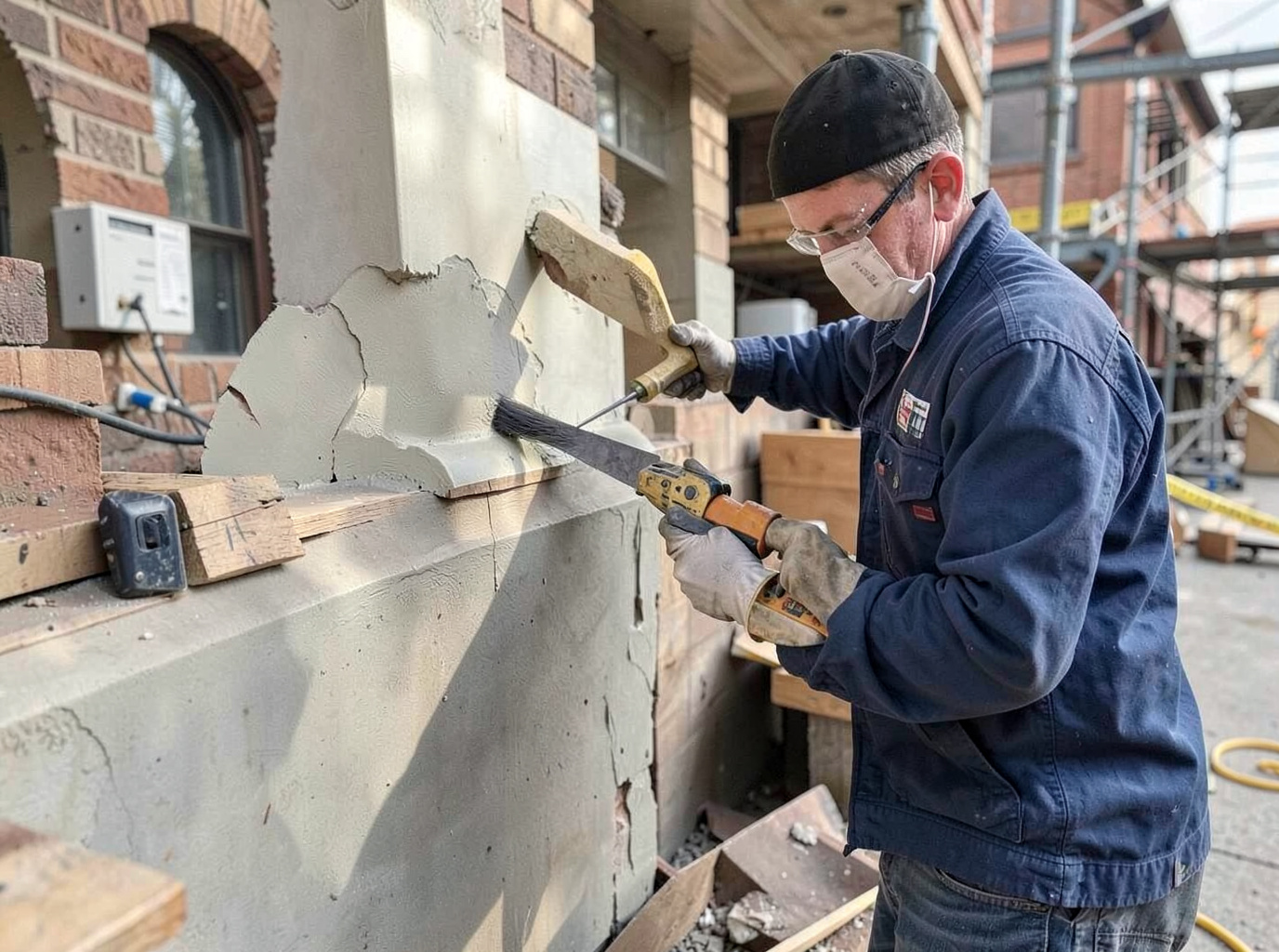
Richmond sits in Fort Bend County along the Brazos River, where humid subtropical weather brings hot summers and mild winters that drive constant moisture cycling. Homes in River Park, The Grove, and Richmond Landing often feature wood or fiber cement siding installed decades ago that expands and contracts with the humidity, leading to warped boards, sealant failure, and hidden rot around window and door frames. The pros we connect you with routinely address these issues by checking for water intrusion at joints and behind trim before any surface work begins.
Proximity to the river and frequent summer storms means siding in Richmond Landing and nearby areas sees accelerated weathering compared to drier parts of the county. Older homes near the Fort Bend County Courthouse or Richmond Railroad Museum commonly have layered repairs from previous decades that must be stripped back to sound substrate. Local pros assess soil movement and drainage patterns unique to the Brazos floodplain because poor grading can push water against foundation siding and create repeat failures.
Repair work here focuses on matching existing profiles and materials while improving ventilation and flashing details to handle the region's temperature swings. Crews familiar with Rosenberg and Missouri City stock often carry common profiles for 1970s-1990s Richmond builds so patches blend without full replacement. The pros we connect you with prioritize removing only damaged sections to limit disruption in established neighborhoods where access can be tight.
Mild winters allow year-round repairs, yet the real constraint is waiting for dry stretches so new sealant cures properly before the next humidity spike. Pros inspect attic ventilation and eave returns because trapped moisture from the subtropical climate often shows first as siding cupping on south-facing walls.
Technician insight
In Richmond, the thing that catches most people out with Siding Repair is how the Brazos River humidity drives rot behind the paint on south-facing walls in River Park homes long before the surface shows cupping. Homeowners often replace visible boards only to have the same issue return the next summer because the original ventilation and flashing were never addressed.
Hidden Rot Behind Trim in The Grove
A Richmond homeowner noticed soft spots near windows after heavy spring rains. The connected pros found water had wicked behind original trim on a 1980s home due to failed sealant and poor drainage toward the river. They removed the affected siding, replaced rotted sheathing, upgraded flashing, and reinstalled matching fiber cement to restore the wall.
How it works
- 1
Initial Assessment
The pros we connect you with inspect siding condition, moisture levels, and underlying structure in your Richmond home.
- 2
Damage Documentation
They photograph affected areas and note patterns tied to local weather exposure or drainage around the Brazos River corridor.
- 3
Targeted Repair Plan
A scope is prepared that addresses only damaged sections while matching original materials common to Fort Bend housing stock.
- 4
Execution and Finishing
Repairs are completed with proper flashing and sealant suited to humid subtropical conditions, followed by a walkthrough.
Pricing
Cost depends on the extent of hidden damage, material type, and access in older Fort Bend homes.