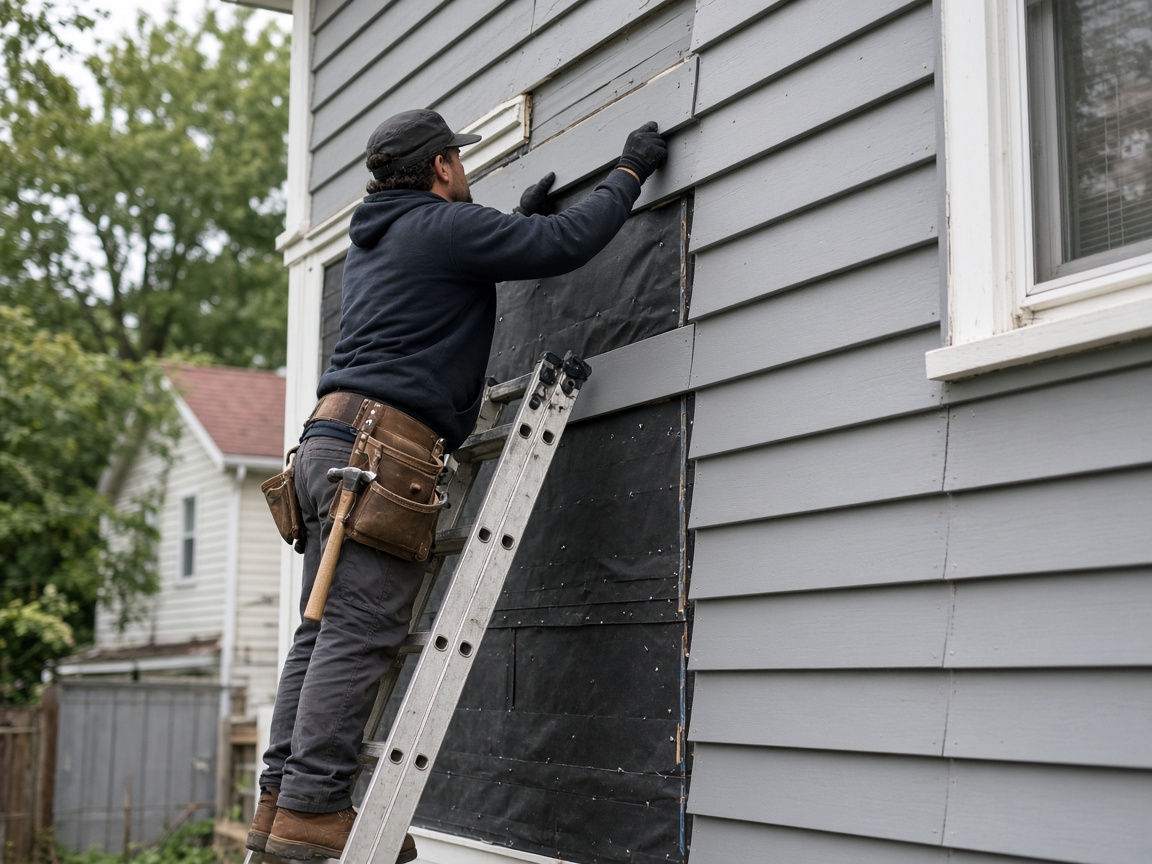
Richmond homes in neighborhoods such as River Park and The Grove often feature older wood or fiber cement siding that suffers from prolonged exposure to Fort Bend County's humid subtropical conditions. Hot summers drive expansion and contraction while mild winters still allow moisture to linger, leading to rot along seams and around windows. The pros we connect you with assess soil drainage near the Brazos River and check for hidden damage common in homes built before modern vapor barriers became standard.
Replacement work in Richmond Landing and nearby Rosenberg frequently involves matching profiles on 1970s and 1980s ranch-style houses while updating to materials that resist mildew better than original wood. Local crews pay special attention to flashing at rooflines and gable ends because heavy summer downpours can push water behind poorly sealed edges. Proper underlayment and ventilation upgrades prevent the rapid deterioration seen in many Missouri City and Sugar Land properties after just one unusually wet season.
Fort Bend permitting requirements focus on wind resistance and proper attachment in high-humidity zones, so the pros we connect you with verify nailing schedules and weep hole placement on every elevation. They also note how proximity to the Richmond Railroad Museum corridor can mean slightly higher wind exposure on certain streets. Homeowners avoid future callbacks by allowing full removal rather than overlay when underlying sheathing shows water staining from past flooding events along the river.
Technician insight
In Richmond, the thing that catches most people out with Siding Replacement is hidden rot along the bottom plates of homes in The Grove and near the Brazos River where high humidity and occasional flooding keep wood damp for months; skipping full removal to save money almost always leads to callbacks within two summers.
River Park Home Siding Replacement
The homeowner noticed peeling paint and soft spots on the south wall after a wet spring. Inspection revealed water had entered behind the original wood siding and damaged sheathing on a 1980s house in River Park. The pros we connect you with removed all layers, replaced affected sheathing, installed new moisture-resistant siding, and added improved flashing at the base. The home now shows no signs of moisture intrusion after the first summer rains.
How it works
- 1
Initial Property Walk-Through
The pros we connect you with examine all elevations, note rot locations, and check attic ventilation in your Richmond home.
- 2
Material Selection and Quote
They review siding options suited to Fort Bend humidity and provide an itemized scope covering removal, disposal, and new installation.
- 3
Old Siding Removal
Existing layers are stripped to sheathing, damaged areas are documented, and the site is protected from debris in neighborhoods like The Grove.
- 4
New Siding Installation
House wrap, flashing, and new panels are applied with attention to expansion gaps required by local summer heat cycles.
- 5
Final Inspection and Cleanup
All seams, caulking, and trim are checked before the crew removes materials and leaves the property ready for daily use.
Pricing
Project costs vary with material choice, home size, and extent of hidden damage; the pros we connect you with supply detailed written quotes after inspection.